
🇹🇼 Keelung (Taipei) Cruise Port Guide 🇹🇼
Shore Excursions & Things To Do
Visiting Keelung and Taipei on a cruise offers travelers an engaging introduction to northern Taiwan, combining a lively harbor city with the cultural and modern attractions of the capital region. While ships dock in Keelung, passengers have easy access to local markets, coastal scenery, and the highlights of nearby Taipei. This Keelung–Taipei cruise port guide is designed for cruise visitors, featuring recommended shore excursions, DIY itinerary ideas, transportation tips, and practical advice to help you make the most of your time ashore — whether you stay close to port or venture inland for the day.
Keelung is a historic port city on Taiwan’s northeastern coast, known for its long maritime tradition, dramatic hillside setting, and vibrant street-food culture.
Just a short journey away lies Taipei, Taiwan’s dynamic capital, where traditional temples and night markets coexist with modern architecture, world-class museums, and bustling commercial districts. Shaped by diverse cultural influences over centuries, the region reflects a blend of heritage and innovation visible in its cuisine, neighborhoods, and public spaces. Together, Keelung and Taipei offer cruise passengers a well-rounded experience — from harbor views and local flavors to cultural landmarks and panoramic cityscapes — all accessible within a single port visit.
🤔 💡❓ FAQs ❓💡🤔
Where do cruise ships dock for Taipei?
Cruise ships visiting Taipei usually dock at the Port of Keelung in Keelung. The port is centrally located in Keelung, with transport links connecting passengers to Taipei.
How far is the port from major attractions?
Taipei’s main highlights are about 30–45 minutes away by train, bus, or taxi. Popular stops include Taipei 101 and Chiang Kai-shek Memorial Hall. Local Keelung sights, such as Keelung Miaokou Night Market, are within walking distance of the port.
Is it easy to explore independently on a cruise stop?
Yes. Frequent trains connect Keelung and Taipei, making DIY exploration practical. Rail services operated by Taiwan Railways Administration are commonly used by cruise visitors.
What is the best way to get from the cruise terminal to Taipei?
Many travelers take the train directly from Keelung Station to the city. Organized tours and taxis are also available for reaching attractions like Longshan Temple or the viewpoints around Elephant Mountain.
Do I need to book attractions in advance?
Most temples, markets, and outdoor viewpoints can be visited without reservations. Booking ahead may be useful for guided tours or structured itineraries during peak travel periods.
Is the area safe for cruise passengers?
Both Keelung and Taipei are generally considered safe and visitor-friendly. As always, stay aware of belongings in crowded public areas.
How much time should I allow to return to the ship?
Because travel back to the port is required, plan to head back early and arrive at least 60–90 minutes before all-aboard time to allow for delays.
Are cruise excursions worth it here?
They can simplify logistics, especially for first-time visitors. Still, independent exploration is popular thanks to reliable trains and clear signage.
💡Keelung (Taipei): Good to Know
🛂 Visa: most European countries plus Canada, Australia, the US, Korea, and Japan are visa-exempt for a stay of up to 90 days; an online arrival card can be filled out here
✈️ Closest Airport: Taiwan Taoyuan International Airport (TPE)
💬 Language: Standard Chinese, but English is also spoken; street signs, announcements, and signage on trains and buses are in English
🏷️ Price Level: While more expensive than other Asian countries, Taiwan is about 30% cheaper than the US and European countries
🍔 Big Mac Index: US: US$5.69 / Taiwan US$ 2.39
💰 Currency: New Taiwan Dollar (NT$, TWD)| 1 USD = ca. 33 TWD)
☀️ Best Times to Visit: spring (March to May) and fall (October and November); while it is warm and humid year-round, summers are hot and humid with occasional heavy rain and typhoons. Winters are short and mild but prone to foggy weather.
🚘 Transportation: local trains, Taipei Metro (MRT), city buses, and taxis, with options for bike rental
🔌 Adapter: Taiwan uses type A and B plugs. No adapter is needed if you are from the US, but one is needed when coming from Europe
🛜 WiFi: widely available; iTaiwan is a free, government-provided public WiFi service that can be accessed
🏧💰ATM and “Cash or Card”: While small food stalls take only cash, payments with cards are generally accepted; ATMs are available throughout the city
💸 Tipping: Tipping is not expected or common, as service charges are often included. Small tips for exceptional service in hotels or on tours are appreciated.
🚢 Cruise Terminal Address: No. 1, Zhongzheng Rd., Zhongzheng Dist., Keelung City 20202, Taiwan (docked)
Click here to find out what other ships are in port: Cruise Port Schedules
✈️ 🚇🚕 Getting There and Around
🏙️ Keelung is located about 18 miles (30 km) from the city center of Taipei. Other notable day trip destinations such as Jiufen (12 miles/ 20 km) and Shifen (9 miles/ 15 km) are close and easily reachable.
🎟️ The Easycard and iPass are both rechargeable cards used for public transportation across Taiwan that can also be used to pay in convenience stores, etc. Cards can be purchased at all MRT stations and stores like 7-11 and Family Mart. Since it is similar to a pre-paid card, value can only be added with cash. There is a 100 TWD non-refundable deposit when first getting the card
✈️ Taipei Taoyuan International Airport (TPE) is located around 25 miles (40 km) west of the city center and can be reached through the Airport MRT. Express trains with ample luggage storage leave from both Terminal 1 and 2 and take around 35 minutes to reach Taipei Main Station (fare 160 TWD).
🚇 To get from Keelung to Taipei Main Station, it is easiest to take the local train from Keelung Station, an easy 10-15 minutes walk from the cruise terminal (50 min, 41 TWD) and then connect to the MRT system from there. Trains are frequent, and announcements and signage are well-posted and in English. Stations have designated numbers and letters, which makes getting around more convenient than having to remember the station name.
🚌 Two lines of the local hop-on-hop-off bus connect the main sights in Taipei. Both lines cross paths at Taipei Main Station, and more information can be found here.
🚲 The public bike sharing service in Taipei is called Youbike (Bikes), and bikes can easily be rented with the EasyCard or iPass cards and used to ride between the different locations (no YouBikes are available in Keelung).
⭐️ Top Sights in Keelung and Taipei
"Taiwan has 1 scooter for every 1.7 people."
📸 Keelung Night Market: This night market is one of the most famous ones in Taipei and is known for its diverse and delicious street food, especially seafood. Most stalls open on a daily basis from 12 pm, but they're busiest between 5 pm and 10 pm.
📸 Keelung Tower: The tower is easy to spot on the horizon due to its bright orange color and unique crane shape. Visitors can take a free elevator to the top of the 60-meter tower, where they can enjoy panoramic views of the city.
📸 Zhongzheng Park: The park can be accessed on foot or via the Keelung Tower (see above) and offers panoramic views of the city and harbor, featuring a large Goddess of Mercy statue, a temple, and other attractions like a Martyrs' Shrine and a Zhuputan Temple.
📸 Jiufen: Jiufen, a charming mountain village in northeastern Taiwan, is known for its narrow, lantern-lit streets, traditional teahouses, and stunning views of the sea, often compared to the enchanting world of Studio Ghibli's Spirited Away.
📸 Shifen: Shifen is a scenic area known for its Shifen Waterfall, nicknamed "Taiwan's Niagara Falls," and the popular Shifen Old Street, famous for its sky lanterns.
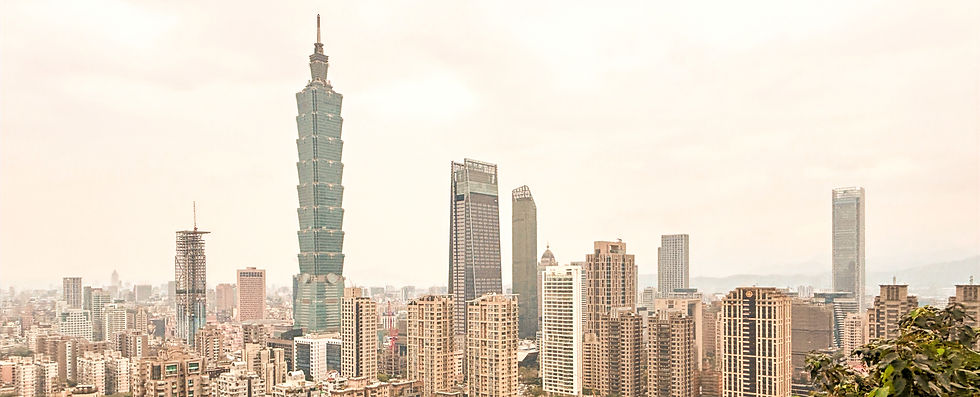
📸 Taipei 101: The most recognizable building in Taiwan was once the tallest building in the world. Designed to resemble a bamboo stalk, it features a large steel sphere inside that helps counteract the building's swaying during earthquakes. An observation deck on the 89th floor offers a 360-degree view of the city.
📸 Longshan Temple: Established in 1738 by Han immigrants from Fujian, this temple has functioned as a municipal center, a guild hub, a self-defense venue, and a place of worship. Today, it stands as one of the city's most important religious sites and a prime location for experiencing Taiwan's vibrant folk faith, as well as its unique temple arts and architecture.
📸 Chiang Kai-shek Memorial Hall: This memorial hall was constructed in honor of Chiang Kai-shek, the first president of the Republic of China. The blue and white colors featured in the memorial hall are significant as they are key colors of the national flag. The blue and white of the top of the memorial represent the blue sky and 12 rays of a white sun.
📸 Ximending District: Ximending is a lively and bustling shopping and entertainment district in Taipei, Taiwan. It is famous for its blend of traditional and modern elements, featuring trendy boutiques, delicious street food, and an energetic nightlife. This vibrant area is a popular destination for both locals and tourists.
📸 Huashan 1914 Creative Park: The park hosts various restaurants, art galleries, cultural shops, and performance venues. Exhibition and performance spaces are also available for rental, further establishing this area as a hub of Taiwan's cultural and creative industries.
📸 National Palace Museum: The National Palace Museum, located in Taipei, Taiwan, is a world-renowned art museum housing one of the largest collections of Chinese art and artifacts, spanning over 5,000 years of history, with over 600,000 pieces.
🥾 Elephant Mountain is a popular hiking destination in Taipei, renowned for its panoramic views of the city skyline, especially the iconic Taipei 101. The main trail is approximately 1.2 miles (2 km), consisting mainly of steep stone staircases, which can be challenging but are manageable for most fitness levels. To get to the trailhead, take the Red Line MRT to Xiangshan Station and take exit 2.
🍽️😋 Regional Specialties
Taipei’s cuisine is deeply rooted in Taiwan’s complex history, blending Indigenous flavors, Chinese culinary traditions—especially from Fujian and Guangdong—and Japanese influences from the colonial era. After 1949, an influx of mainland Chinese brought even more regional diversity, enriching the local food landscape. These layers of history have shaped a cuisine known for its bold yet balanced flavors—savory soy sauces, aromatic five-spice blends, fermented ingredients, and slow-braised meats are common themes. Taipei’s iconic dishes, like beef noodle soup, lu rou fan(braised pork rice), and stinky tofu, reflect a love of comfort food with deep umami notes, while snacks like bubble tea and mango shaved ice offer sweet, playful contrasts.
🍽️ Beef Noodle Soup (牛肉麵): Most Taiwanese people have a local favorite spot where a bowl of beef noodles typically costs no more than 185 TWD (around USD 6). The dish features tender, slowly braised beef served with a tangle of slurpable noodles and is usually recognized as the national dish of Taiwan.
🍽️ Hot Pot (火鍋): Hot Pot is a cherished culinary tradition in Taiwan, making it a popular choice year-round. With nearly 5,000 hot pot restaurants across the country, diners can choose from various styles, including shabu-shabu, Sichuan mala, and Taiwanese stinky tofu. At these restaurants, Taiwanese people enjoy dipping a variety of ingredients—such as seafood, thinly sliced meat, leafy vegetables, dumplings, wontons, mushrooms, and various types of tofu—into large pots of simmering broth, which is often made from pork bones, jujube, or pickled cabbage. Diners retrieve their selected items from the pot using chopsticks or tongs and dip them into a savory sauce that they can customize with ingredients like sesame oil, soy sauce, garlic, and freshly chopped herbs.
🍽️ Stinky Tofu (臭豆腐): Despite its name, this dish is a beloved Taiwanese delicacy, known for its pungent aroma and crispy exterior, and soft interior.
🍽️ Xiao Long Bao (Soup Dumplings) (小籠包): A staple in the Taiwanese cuisine, soup dumplings are known for their thin, translucent skin, savory filling (often pork and broth), and the delicious soup that's released when you bite into them.
🍽️ Scallion Pancake (蔥油餅): They are made from a wet, unleavened dough rather than a batter. They are often eaten for breakfast but can be enjoyed at any time of the day. Fried fresh for each customer, vendors usually roll them up and pop them into a paper bag with the top sticking out, ready to eat.
🍽️ Braised Pork Rice (滷肉飯): Braised pork rice is a comforting dish that represents how Taiwan finds solace in food. Like many comfort foods around the world, it is simple and unpretentious: tender pieces of fatty, soy-braised pork belly served over freshly steamed white rice.
🥤Boba Tea: Also known as bubble tea, is a Taiwanese drink featuring tea (often milk tea) with small, chewy tapioca pearls (boba) at the bottom, offering a unique textural and flavor experience
🥤Papaya Milk: The island’s most famous fruit “milkshake” has only two ingredients- papaya and milk. It’s found freshly made at night markets but also pre-packaged at convenience stores.
📍🗺️ Maps, Apps & Links
🌐 Hop On Hop Off Sightseeing Bus
🚕 Uber
💎🔍🗺️ What else? Hidden Gems
🍹 Sip the Flavours & Stories of Taipei’s Bubble Tea Culture 🧋🌆
Amid Taipei’s neon-lit streets and bustling night markets lies a drink that has become a global icon: bubble tea. Invented in Taiwan in the 1980s, this delightful blend of tea, milk, and chewy tapioca pearls isn’t just a beverage—it’s a cultural phenomenon, a city-wide obsession, and a story of creativity stirred into every cup.
From humble tea shops to worldwide fame, bubble tea captures the spirit of Taipei: playful, innovative, and deliciously authentic. Whether you like it frothy, fruity, milky, or topped with cream foam, there’s a cup waiting with your name on it. ✨
🧋 Must-Try Bubble Tea Styles in Taipei
🍯 Classic Pearl Milk Tea – The original. Black tea, milk, and perfectly chewy tapioca pearls—balanced, comforting, and iconic.
🍵 Matcha Latte with Pearls – Earthy Japanese matcha blended with fresh milk and chewy boba for a smooth, refined sip.
🍠 Taro Milk Tea – Sweet, pastel purple, and made with real taro mash—a dessert-like treat in a cup.
🍋 Lemon or Grapefruit Green Tea – Bright, zesty, and refreshing; Taipei’s favourite on hot summer afternoons.
🧂 Salted Cream Foam Tea – Silky, savoury-sweet cream atop iced tea; tip the cup for the perfect blend.
🫐 Fruit Tea with Jelly or Aloe – Bursting with seasonal fruit, vibrant colours, and the signature Taiwanese love for texture.
📍 Where to Sip the Best in Taipei
🍶 Chun Shui Tang (春水堂) – Often credited as the birthplace of bubble tea; a must-visit for history and the original flavour.
🧋 Tiger Sugar – Famous for its Instagram-worthy brown sugar “tiger stripes” and warm, caramelised pearls.
🥤 50 Lan (五十嵐) – A beloved everyday chain known for consistent quality, customisation, and classic flavours.
🍑 Yi Fang Fruit Tea (一芳) – Fresh, aromatic fruit teas inspired by traditional Taiwanese recipes.
🍵 Xing Fu Tang (幸福堂) – Hand-fried brown sugar pearls, crafted fresh in front of you—pure theatre in a cup.
🌙 Night Markets (Shilin, Raohe, Ningxia) – Stroll with a cup in hand as you explore skewers, snacks, and street vibes.
🌏 A Living Tradition, One Cup at a Time
Bubble tea is more than a drink—it’s Taipei’s liquid storytelling. Every shop experiments with new toppings, brewing techniques, and textures, reflecting a culture that blends old and new with playful confidence. From students queuing after class to office workers on their afternoon break, bubble tea is a daily ritual, a treat, and a shared delight.
As you wander Taipei’s streets with a cold cup and pearls bouncing at the bottom, you’ll taste the city’s essence: inventive yet grounded, sweet yet complex, modern yet proudly rooted in tradition. ❤️🧋
💡 Tip: Taipei shops let you customise everything: sugar level, ice level, toppings, tea strength. Try your drink “half sugar” or “less ice” for a true local-style experience. And bring cash—many small shops still prefer it. Don’t rush; sip, stroll, and savour. Taipei’s story is written in tea and tapioca. 🌟